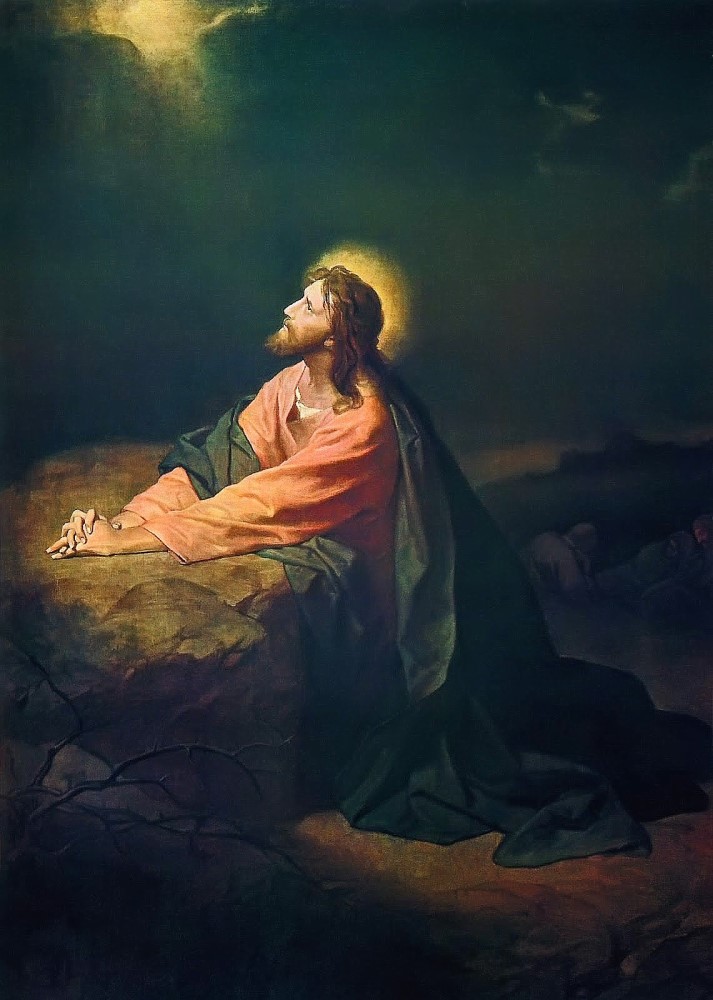
Why did God take 14 Billion Years to Create the Physical World?

Recently in the comments section of one of the articles here, a reader named World Questioner asked:

Why did God take 15 billion years to create the physical world? Couldn’t he have done it in just six days? What is a good reason for God to have all species descended from a common single-celled ancestor? Couldn’t he make all species distinct and create each creature to reproduce after its kind? Why did God decide humans should be descended from apes? Couldn’t the first humans have just been created separately, distinct from all animals?

You can see the comment here, and my original response here. This article is an edited and expanded version of my original reply.

Universe timeline

Hi World Questioner,

All these questions zero in on a single aspect of how God creates things:

God creates things, not instantaneously, but by using step-by-step processes. Nothing just pops into existence. Everything develops over time.

Why?

It’s a very good question. I’m still thinking about it.

One answer is that God is working with material reality, which is pliable, but also resistant to change. Compared to divine reality, which operates outside of time altogether, and is present in all time and space simultaneously, and compared to spiritual reality, which also has no time and space as we know it, but which does have distance and nearness and a sequence of events, material reality exists within space and time. In material reality, things must unfold over spatial distances and on temporal time scales. This means that doing things instantaneously is contrary to the very nature of physical reality.

Why did God create material reality in this way?

For more on the design of the material universe, please click here to read on.

Tagged with: , , , , , , , , , ,
Posted in Science Philosophy and History

Is It Okay to Masturbate in a Sexless Marriage?

Recently a reader named Average Joe submitted a Spiritual Conundrum to Spiritual Insights for Everyday Life. His question: Is it okay to continue to masturbate for sexual release considering that he is now married, but in the six years since the wedding there has been no sex at all? He also asked whether he is really married, since the ceremony was not done in a church, but in a courthouse officiated by a Justice of the Peace.

Sexless marriageI’ll show his full question in a moment. First, here’s the short answer:

As covered in my earlier articles on the subject, masturbation, if practiced in moderation to release sexual tension, is not wrong or evil, but good and even healthful—though of course, nowhere near as good and healthful as sexual intercourse within a loving, faithful, monogamous marriage.

For the Bible-thumpers out there, the Bible does not say one word about masturbation. The traditional “Christian” prohibition on masturbation is completely unbiblical. See: “What does the Bible Say about Masturbation? Is Masturbation a Sin?

Is a marriage performed by a Justice of the Peace a real marriage? You might be surprised to hear that throughout the Bible, and for the first 1,000 years of Christianity, marriage was a purely civil matter. The church wasn’t involved in it at all, except to forbid adultery. In Bible times there was not even a wedding ceremony, let alone a priest officiating at it. And in the Christian era it wasn’t until after the Protestant Reformation in the sixteenth century that it became mandatory for a priest or minister to officiate at weddings.

Is a marriage performed by a Justice of the Peace valid? From a biblical perspective, it’s just as valid as a marriage performed by a minister or priest. Neither one is required by the Bible.

For more on masturbation in a sexless marriage, please click here to read on.

Tagged with: , , , , , , , ,
Posted in Sex Marriage Relationships

Will We Remember Loved Ones Who Go to Hell?

What if someone we love goes to hell? Will we still remember them? Won’t that kind of suck?

That is the essence of some questions that a reader named Max asked in several recent comment threads here on Spiritual Insights for Everyday Life. And though the answers aren’t what everyone wants to hear, the point of this website is not to be popular, but to give real answers to hard questions.

Paths to heaven and hellFirst, contrary to popular belief, hell is 100% voluntary. No one is forced to go there. During our lifetime on earth we choose whether we want to go to heaven or to hell by deciding what kind of person we want to be. If we decide to be a selfish and greedy S.O.B., we are choosing to go to hell. If that is our choice, in the afterlife neither God nor the Devil will send us to hell. We will go there of our own free will because that’s where we prefer to be. See: Is There Really a Hell? What is it Like?

Second, the afterlife is a continuation of this life. We are still the same person we have always been, but we are the same person we were inwardly. Any outward fakeries or masks that we have put on are stripped away. We become outwardly exactly the person we were within ourselves here on earth. See: What Happens To Us When We Die?

This means that the answers to these questions are human answers, based on who we are and how we function as human beings. And even here on earth, we drift away from, and sometimes consciously choose to cut ourselves off from, people who have taken paths that go in an opposite or very different direction than the path we have chosen. When it comes to people who have chosen hell, we do this not only because their life is incompatible with ours, but also to protect ourselves from the harm they would do to us if we let them keep their hooks in us.

It’s not that we can’t remember them. It’s that we choose to move on with our life, and leave them to their own very different chosen life. And eventually, yes, we forget that we ever knew them. Otherwise, it really would suck, both for us and for them.

For more on loved ones who choose hell, please click here to read on.
Tagged with: , , , , , , , ,
Posted in The Afterlife

Furries and Therians and Satyrs, Oh My!

Midwest FurFest 2024In recent weeks and months, the latest way for young people to annoy their parents has been in the news. Most of the action happens online, but there are in-person gatherings and conventions too. That’s when the older generation really gets worked up.

What terrible, awful thing are the youth doing now?

They’re dressing up as animals and calling themselves “furries“ and “therians.” Shocking!

But don’t call a therian a furry, or a furry a therian. You’ll get an earful about how they’re not at all the same! Here’s how to tell the difference:

  • A furry is an animal being human.
  • A therian is a human being an animal.
Otherkin heptagram

Otherkin heptagram

In fancier terms, a furry is someone who’s into anthropomorphized animals, whereas a therian is a person who identifies with, or as, a mammalian animal. Therians are part the broader phenomenon of “otherkin,” which is a blanket term for people who identify with various non-human creatures and species.

One classic expression of the “furry” idea is the 1972 novel Watership Down, by Richard Adams. The novel centers on a clan of talking rabbits that are culturally very human. Therians, on the other hand, are more akin to individuals in some indigenous cultures identifying with the spirit of a particular animal.

Though furries and therians are effective at annoying the older generation, they’re really nothing new. Even the Bible has a story about a talking donkey.

And what about those satyrs? We’ll get to that. As it turns out, there is a real connection between humans and animals, not only physically, but spiritually.

For more on furries and therians, please click here to read on.

Tagged with: , , , , , , ,
Posted in Current Events, Popular Culture

Love, Mercy, and Evil

Then Abraham approached him and said: “Will you sweep away the righteous with the wicked? (Genesis 18:23)

In the previous article in our series on the inner life of Jesus, we followed the story of Abraham having a meal with three visitors, who predicted Isaac’s birth. That was the second prediction of the birth, and it was made in person by three angels who were filled with God’s presence. That story, in the first half of Genesis 18, relates to Jesus’ deep sense of connection with the Divine within. The previous article talked about communion: about communing with God. Eating a meal with God is sharing God’s love and feeling a sense of closeness to God in our hearts.

This relates to our human feelings of closeness to God, and to a period in Jesus’ life when he was feeling close to the Divine within. “The Father” is another name for the divine nature within Jesus, or the soul of the Lord from which Jesus came. The story in the first half of Genesis 18 is about a sense of closeness to God. It speaks of our feeling that God is right there present with us, and that everything is good because of God’s presence.

As we head into the second half of Genesis 18—specifically, Genesis 18:16–33, which I invite you to read at the link—we get a rude awakening from that wonderful reverie with God. Right after the deep connection with God comes the story of Sodom, which continues through chapter 19.

For more on love, mercy, and evil, please click here to read on.

Tagged with: , , , , , , , , , , , , ,
Posted in All About God, The Bible Re-Viewed

Flight of the Condor

Imagine for a moment that you suffered a catastrophic illness that has kept you hospitalized for such a long time that you forget what it feels like to be out in the world. In the early days of your illness, you were bedbound and barely conscious. A few months later you remain bedbound, but your mind is becoming alert. You see the nurses and doctors moving around you, smell the pervasive disinfectant, hear the hums and beats of medical equipment toiling to keep you alive. From your supine position you are starting to follow the daily rhythms of hospital life. This is your new normal. It is your new world. The old you and your life in the outside world fades from your mind.

And then you are moved to a rehabilitation ward where you are kept busy as you painfully relearn how to operate your body, how to move from one spot to another, how to bring food to your mouth so you can eat. The rehabilitation ward is now your new normal, and memories of your bedbound hospital experience begin to fade. You imbibe the daily rhythms of the rehabilitation ward as you work towards becoming a new you. Your life here is now your complete existence. The outside world doesn’t exist for you. In fact, you rarely dwell on the mundanities of the outside world.

As your body heals and your limbs regain strength, you are informed that it is time for you to return to the outside world. You understand the outside world intellectually, but you have lost your feel for it. Despite previously living in the outside world, you find yourself suddenly uncertain and cautious about rejoining it. You want to, but you are uncertain whether you are able to.

For more on the flight of the condor, please click here to read on.

Tagged with: , , , , , , , , , , , ,
Posted in Current Events

Is God Free?

In a recent comment here on Spiritual Insights for Everyday Life, a reader called sran4275 posted two videos by American intellectual Robert Lawrence Kuhn titled “Is God Totally Free?” and “How Free is God?” The videos feature interviews with various thinkers on the issue of God’s freedom. They are heady and fascinating if you’re into that sort of thing. Each video is a little over 25 minutes long. Here they are, if you would like to watch them:

Sran4275 wanted to know what I thought of the videos. You can see the original comment here, and read my original reply here. This post is an edited version of my reply.

Short version: I think the discussion of God’s freedom in the interviews is missing some key elements of God’s nature, and of the nature of freedom. If we truly consider God’s eternity, omniscience, and omnipotence, and take it seriously that God is the source of everything that exists, a different picture emerges about God’s freedom.

For more on God’s freedom, please click here to read on.
Tagged with: , , , , , , , ,
Posted in All About God

Why is God Always Silent?

Here is a Spiritual Conundrum submitted to Spiritual Insights for Everyday Life by a reader named Lincoln:

Dear Lee,

I’ve been a reader of this blog for a few years now and I think it offers a truly beautiful, logical and comforting theology and some great advice for spiritual development and doing good. However, there’s one question that I’m still really struggling with, if God is there, why is He always silent?

Now, I understand all the reasons why God veils Himself and doesn’t appear to all humans at all times, for example, free will.

But what I struggle to understand is why God doesn’t reach out to me personally, as someone who struggles with doubt and does want to hear from Him and be guided by Him? After all, countless people throughout history and in the Bible have heard from God in one capacity or another, so why would He be silent when it comes to me? And is there anything I can do to bridge that gap?

Thanks for the good question, Lincoln. And thanks for your kind words about our blog. I’m glad you’re finding the articles here helpful in your spiritual life!

Talking with God - AI artworkHonestly, I can’t answer the question of why God is silent when it comes specifically to you. Only God knows that. Only God knows your entire life and your entire self, from inside out and from beginning to end. I don’t have that kind of knowledge. But God does, and God always acts with your eternal happiness in mind.

However, I would suggest that God has not been as silent as you think. It’s natural to want an audible voice from God of the kind that so many people in the Bible and throughout history have heard. That’s how we talk to our family and friends. But an audible voice isn’t the only way God speaks to us.

Yes, there are reasons God doesn’t talk to most people in the ordinary human way. Free will, of course. But also the materialism of our age and our own lack of faith, which make it too easy to doubt and explain away any experience of hearing God’s voice.

But more than that, the path toward hearing God’s voice is not through testing God by requiring God to speak to us in a particular way, but through listening for the ways God is already speaking to us in the Bible, through other people, and through our daily experience, not to mention within our own heart.

For more on God’s voice, please click here to read on.

Tagged with: , , , , , , , , , , , , , ,
Posted in All About God

The War Between Men and Women?

I grew up in a house full of books. The living room wall was lined with books. From time to time, I would pull one off the shelf and read it. Many of them were serious classics.

The War Between Men and WomenThen, there was humorist James Thurber. I flipped through his book Men, Women, and Dogs, originally published in 1943, laughing at the cartoons. But the only ones I remember decades later were a series that, to my young mind, were both funny and weird: “The War Between Men and Women” (the inspiration for the 1972 comedy movie of that name), featuring literal pitched battles between armies of the opposite sexes.

Apparently, that battle has been going on for a long time.

Fortunately, there are not literal physical armies of men fighting armies of women. But we do have the ongoing verbal and sometimes legal battle between feminism and the manosphere. And in general, for a century or more there has been tremendous conflict and chaos about the roles of women and men, and their relationship with each other legally, socially, economically, and interpersonally.

Are men and women destined to be in eternal conflict with one another?

I don’t think so.

But I do think that the current chaos in that realm is a symptom of a major transition in the relationship between man and woman. Specifically, I believe we are making the painful transition from an era lasting thousands of years in which women were secondary to, and even subservient to, men, to a new era in which there will be genuine equality—but not sameness—between men and women.

And I believe that this is a good thing.

For more on man and woman, please click here to read on.

Tagged with: , , , , , , , , ,
Posted in Sex Marriage Relationships

Communing with God

Three men visit Abraham and Sarah“If I have found favor in your eyes, my Lord, do not pass your servant by. Let a little water be brought, and then you may all wash your feet and rest under this tree. Let me get you something to eat, so you can be refreshed and then go on your way—for this is why you have come to your servant.” (Genesis 18:3–5)

If you get a sense of déjà vu as you read Genesis 18:1–15, which is the next story in our series on Genesis, it is for a good reason: In chapter 17 of Genesis, covered in the previous article in the series, God had already come to Abram (renaming him Abraham) and predicted that his wife Sarai (renamed Sarah) would have a son in her old age. The first time around it was Abraham who laughed, rather than Sarah, to think that he would have a son at the age of a hundred, and his wife at the age of ninety. And it was from this laughter that their son Isaac got his name: in Hebrew, “Isaac” means “laughter.”

Now, in chapter 18, God appears to Abraham again to deliver the same message, but this time Sarah is listening in.

Some Biblical scholars might say that, similar to the two different Creation stories in Genesis chapters 1 and 2, God appeared to Abraham only once, but two different versions of the event were passed down through oral history, and when it came time to write it down, the ancient scribes preserved both versions in the narrative. Others would say that the narrative describes events as they happened, and that if two stories of God appearing to Abraham are told, it is because God delivered the message twice.

I am quite content to leave that debate to the scholars. Whatever may have happened in southern Palestine four thousand years ago, the stories in the Bible are given, not to tell us about ancient family history, but to tell us about the Lord, and about our own spiritual growth and journey. If we look at these two stories with a spiritual eye, we find that they are not merely repetitious, but that each has its own distinct story to tell—and that one builds upon the other.

For more on communing with God, please click here to read on.

Tagged with: , , , , , , , , , , , ,
Posted in All About God, Spiritual Growth
Lee & Annette Woofenden

Lee & Annette Woofenden

Donate

Support the work of Spiritual Insights for Everyday Life by making a monthly donation at our Patreon

Join 1,260 other subscribers
Earlier Posts
Featured Book

Great Truths on Great Subjects

By Jonathan Bayley

(Click the title link to review or purchase. This website receives commissions from purchases made via its links to Amazon.)

Blog Stats
  • 4,226,690 hits